

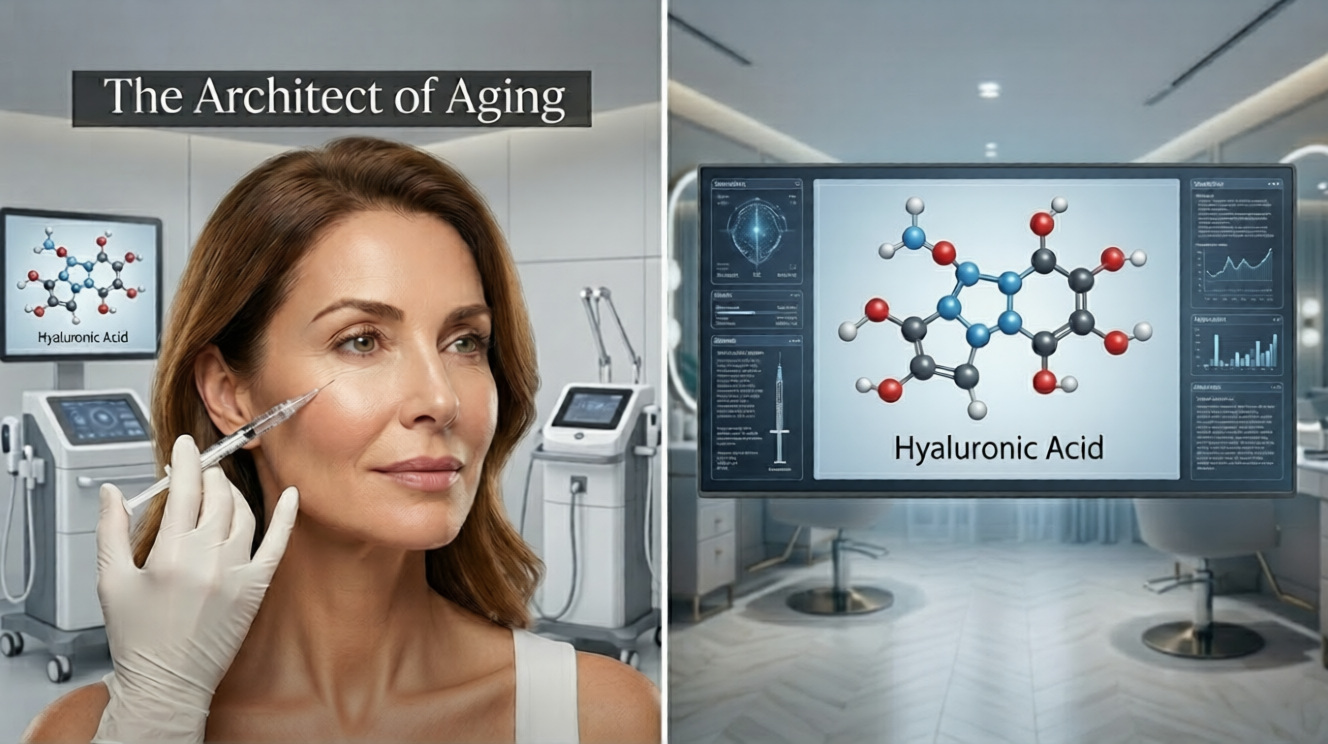
The landscape of aesthetic medicine has shifted dramatically over the last decade. We have moved away from the “frozen” or “overfilled” looks of the early 2000s toward a philosophy of Natural Optimization. Today, dermal fillers are not just about adding volume; they are about sculptural integrity and dermal scaffolding. However, as procedures become more accessible, a gap in consumer knowledge has emerged. Achieving a flawless, long-lasting result is 50% the practitioner’s skill and 50% the quality of the product and subsequent aftercare.
In this comprehensive guide, we deconstruct the science of injectables, from the rheology of professional-grade products found via global leaders like Sarah & Bendrix’s dermal filler selection to the biological lifestyle hacks that protect your aesthetic investment.
1. The Biological Blueprint: Why We Age and How HA Intervenes
To understand fillers, one must understand the “Triangle of Youth.” In our 20s, high cheekbones and a crisp jawline form the base of an upright triangle. As we age, bone resorption, fat pad migration, and the loss of structural proteins (collagen and elastin) cause this triangle to invert.
Hyaluronic Acid (HA) is a humectant naturally present in our skin, capable of holding 1,000 times its weight in water. Modern fillers use “cross-linked” HA to provide a scaffold for your tissues. As explained in the comprehensive Healthline guide to dermal fillers, these treatments work by replenishing the body’s natural supply of HA, which diminishes as we age, leading to the formation of fine lines and volume loss. By chemically bonding the HA chains, manufacturers create a gel that provides a “scaffold” for your tissues, lasting anywhere from six to eighteen months depending on the area treated.
2. Deciphering Product Quality: Rheology and Resilience
The most common mistake patients make is treating all fillers as equal. In the professional world, we talk about Rheology—the study of how a substance deforms and flows. When sourcing products globally, quality is the only metric that guarantees safety. High-tier professional platforms curate products based on three critical scientific pillars:
- G’ Prime (Elasticity): This determines the filler’s “lift capacity.” A high G’ Prime filler (like those used for the jawline) acts like a firm spring, resisting the weight of facial tissues.
- Cohesivity: This is the internal “glue” of the gel. High cohesivity prevents the filler from spreading or migrating into unwanted areas.
- Viscosity: This dictates how smoothly the product integrates into the dermal layers, ensuring that when you smile or speak, the filler moves with your face rather than looking like a static “lump.”
3. The Pre-Injection Protocol: Setting the Foundation
A successful outcome begins seven days before the needle touches the skin. The goal is to minimize “inflammaging”—the inflammatory response that can lead to bruising and premature filler degradation.
- The “Clean” Week: Avoid blood thinners such as aspirin, ibuprofen, and supplements like Vitamin E, Ginseng, and Omega-3. These increase the risk of hematomas.
- The Hydration Multiplier: Because HA is hydrophilic (water-loving), systemic hydration is vital. Drinking 2–3 liters of water daily for a week prior ensures your extracellular matrix is “plump” and ready to integrate the gel.
- Vascular Health: Avoid alcohol 48 hours prior. Alcohol dilates blood vessels, significantly increasing the likelihood of post-procedural bruising.
4. Immediate Aftercare: The Critical 48-Hour Window
Once the filler is injected, it exists in a “malleable” state. It takes roughly 48 to 72 hours for the gel to fully integrate with your collagen fibers.
- The “Hands-Off” Rule: The injection sites are microscopic entry points for bacteria. Touching the face or applying makeup within the first 12 hours can lead to biofilm formation—a rare but serious complication where bacteria create a protective layer around the filler.
- Gravity and Positioning: Sleep on your back with your head elevated. This prevents asymmetrical pressure from molding the filler while it is still settling.
- Avoid High Heat: Skip the gym, saunas, and hot yoga for at least 48 hours. Increased blood flow and heat can exacerbate swelling and potentially displace the product.
5. Maximizing Longevity: Fighting the Hyaluronidase War
Your body produces an enzyme called hyaluronidase, which naturally breaks down HA. To make your filler last, you must slow down this enzymatic process.
- The UV Shield: UV radiation is the primary external catalyst for filler breakdown. Sun exposure triggers the release of free radicals that “eat” through your dermal scaffold. Applying a broad-spectrum SPF 50+ is not just a skincare tip; it is a financial strategy to protect your aesthetic investment.
- Stress Management: High cortisol levels are linked to faster tissue degradation. Maintaining a balanced lifestyle can actually help your cosmetic results last longer.
6. Nutrition and the “Inside-Out” Approach
Fillers work best in a healthy “micro-environment.” If your body is in a state of chronic inflammation due to a high-sugar diet, your fillers will degrade faster.
- Zinc Supplementation: Some studies suggest that HA fillers may last longer in patients with optimal zinc levels, as zinc acts as a co-factor for tissue repair.
- Vitamin C: Essential for the synthesis of your natural collagen, which reinforces the filler’s structure.
7. Global Sourcing: Authenticity and Sterile Manufacturing
In a globalized market, the “Grey Market”—unauthorized or counterfeit injectables—is a growing danger. Fillers are medical devices, and their efficacy depends on a strict cold-chain supply and sterile manufacturing. Trusting established global distributors like Sarah & Bendrix is the only way to ensure that the products used—whether they are Revolax, Juvederm, or Restylane—have been stored and transported according to international safety protocols. Selling globally means navigating complex regulations to ensure temperature-controlled delivery, which is what separates industry leaders from mere vendors.
8. Conclusion: The Empowerment of Choice
Aesthetic treatments are a form of self-care and empowerment. By choosing high-quality products, understanding the underlying anatomy, and committing to a rigorous aftercare routine, you ensure that your results are as safe as they are beautiful. In the world of aesthetics, the most expensive product is the one that doesn’t work or causes a reaction. Investing in quality ensures that your journey toward self-enhancement is backed by science, safety, and global excellence.
You May Also Like: What is a Lip Flip? Your Full Guide
 Newsha